School meal programs increase participation by paying attention to what students need at mealtime
David Newman, CEO of Sodexo at School, examines the importance of designing daily school meal programs that work for every student and paying attention to “timing, flow, food quality, culture, and emotional climate,” so that students “are more likely to eat nourishing foods that support learning.”
March 23, 2026
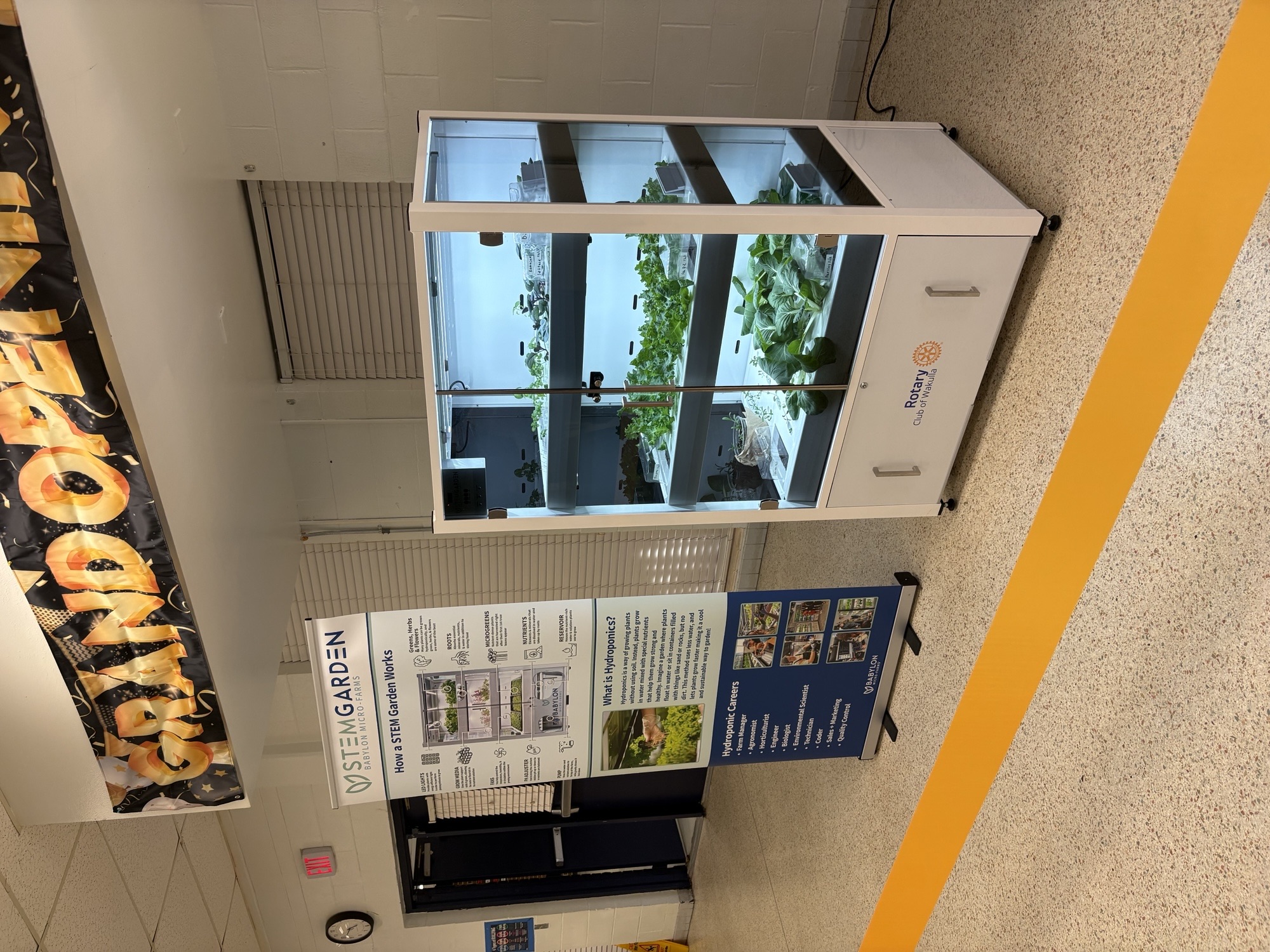 A HYDROPONIC GARDEN IN THE SCHOOL CAFETERIA GROWING FRESH PRODUCE FOR STUDENT MEALS WHILE PROVIDING INFORMATION ON HOW THE SYSTEM WORKS.
PHOTO CREDIT: SODEXO
Every year, millions of U.S. schoolchildren are eligible for federal free or reduced-price meals—and still go hungry. The programs exist. The funding is in place. The food is there. Yet participation lags dramatically behind need, especially at breakfast. Policymakers often ask, “Why aren’t more kids eating?” They assume the barriers are awareness, stigma, menu options, or nutrition standards.
These may be part of the reason for the lag in participation. But there’s another answer that may be simpler, more human, and more often overlooked. Kids eat when the experience works for them.
For decades, school meal programs have been designed for the operational needs of adults: schedule efficiency, staffing patterns, food production logistics, line management, and federal reimbursement rules. What they were not designed for—at least not intentionally—is the lived experience of children. That mismatch has quietly become one of the most persistent drivers of hunger in American schools.
In the post-pandemic era, the gap between eligibility and participation has grown even wider. Districts are operating under unprecedented pressure: Rising food prices, supply chain instability, labor shortages, and shifting federal nutrition regulations have strained even the strongest school nutrition programs. At the same time, student expectations have evolved. Outside of school, today’s learners are accustomed to fresh and customizable meals with international flavors. Traditional foodservice models cannot meet these expectations without rethinking the experience of school meals from the ground up.
Against this backdrop, research continues to reinforce what educators, foodservice leaders, and families see daily: The environment surrounding a meal is as important as the meal itself. When schools redesign mealtime experiences—timing, flow, food quality, culture, and emotional climate—participation increases, stigma decreases, and children are more likely to eat nourishing foods that support learning. Districts nationwide, including many partnering with Sodexo, are demonstrating how intentional design can elevate school meals into a cornerstone of student well-being.
Equally important is the growing recognition that school meals are part of a school’s equity strategy. Mealtime experiences directly influence learning recovery by helping stabilize energy levels, attention, and emotional regulation—factors still deeply affected by pandemic-era disruptions. Cafeterias and breakfast routines can serve as daily rituals that support belonging. They offer predictability and connection in a time when student isolation and mental health concerns remain high.
For students who rely most on school meals, particularly those experiencing food insecurity, the design of these experiences determines whether they feel welcomed, respected, and included. In this way, the quality of the mealtime experience becomes a matter of educational equity, not just nutrition.
At its core, the movement to reimagine school meals is not just about food. It is about creating educational environments that allow every child to feel cared for and ready to learn. Hunger hinders focus, emotional regulation, social connection, and academic persistence. Reducing hunger, then, requires more than providing calories: We must strengthen the conditions that allow students to access, enjoy, and benefit from nutritious meals.
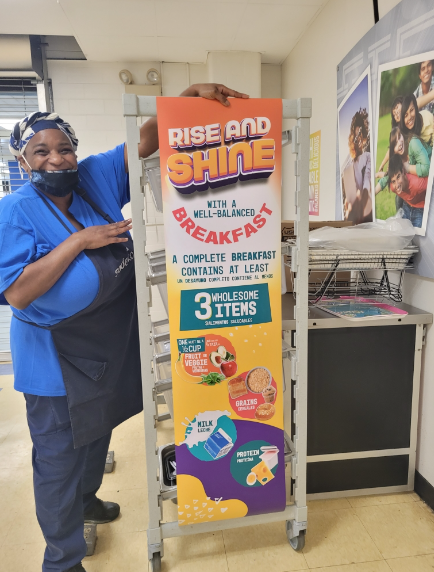 A SODEXO EMPLOYEE POSES NEXT TO A BREAKFAST CART
FEATURING NUTRITION EDUCATION SIGNAGE.
PHOTOS CREDIT: SODEXO
THE MISSING PIECE IN SCHOOL MEAL DEBATES
In the 2023-24 school year, 15.4 million children ate school breakfast, and 29.4 million ate school lunch on an average day. We know that many qualified students are not participating in school feeding programs. The issue is less about eligibility and more about experience. Students report rushed schedules, long lines, and social stigma as the most common barriers to participation.
These participation patterns matter beyond nutrition. School leaders are simultaneously addressing escalating levels of stress, anxiety, and disconnection among youth. The CDC’s 2023 Youth Risk Behavior Survey found that 40% of high school students reported persistent feelings of sadness or hopelessness, a stark reminder that the school day must support not only academic expectations but also mental well-being. Mealtime environments offer daily opportunities for students to experience routine, companionship, and a sense of predictability.
When students have consistent access to a calm, welcoming space and a meal they enjoy, the benefits extend throughout the school day: fewer hunger-related nurse visits, better emotional regulation, and stronger readiness to learn. These impacts underscore the value of designing food programs around the lived experiences of students.
SHAPING THE MEALTIME EXPERIENCE
Fortunately, when districts remove logistical hurdles and offer more inclusive service models, they see participation rise. While some things about school meals are out of their control, school leaders have four levers at their disposal that can help create better mealtime experiences. School districts that are paying attention to these conditions are seeing results.
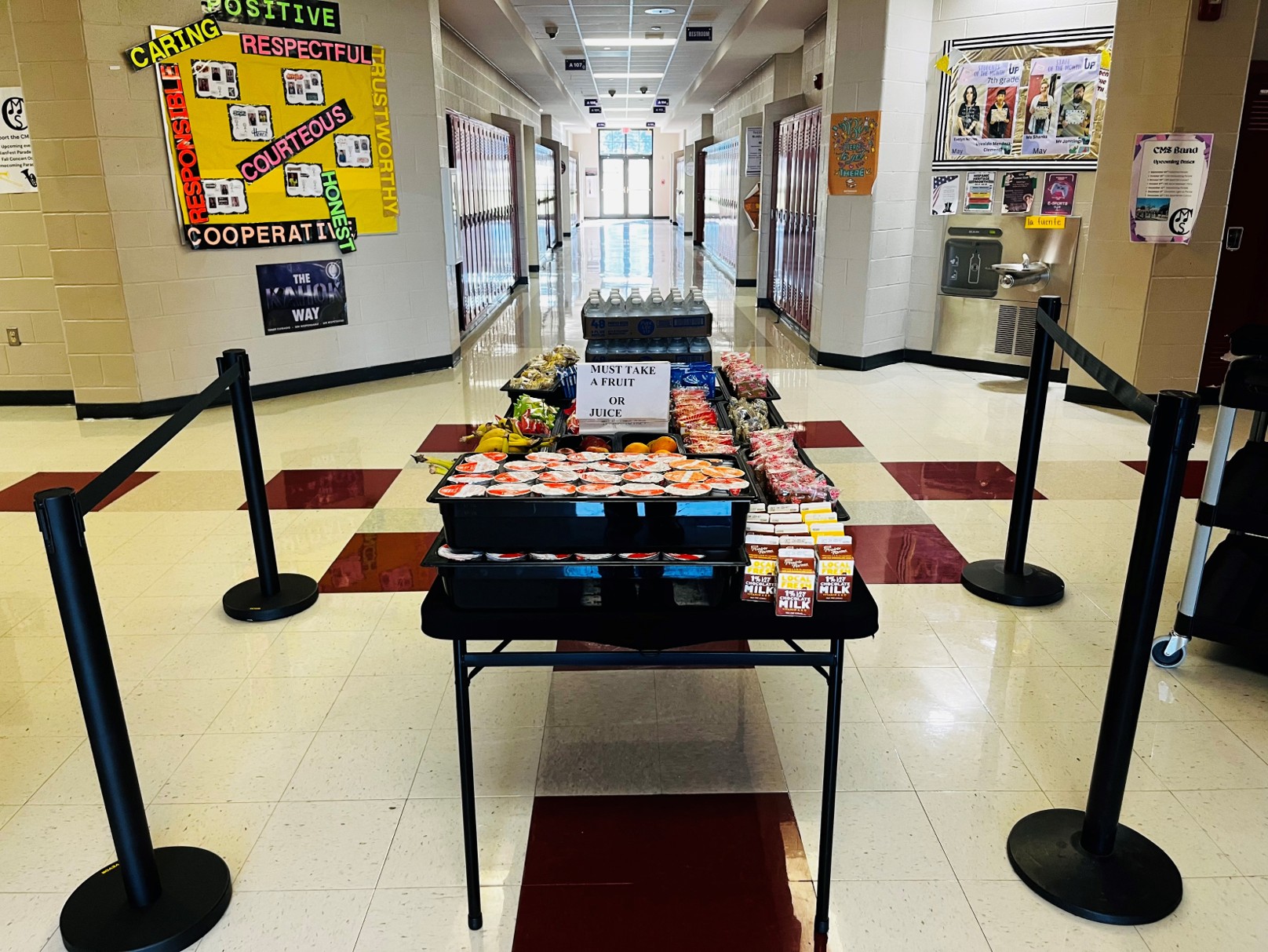 A GRAB-AND-GO BREAKFAST CART AVAILABLE TO STUDENTS.
PHOTO CREDIT: SODEXO
Physical environment and flow: The cafeteria as a social space
The cafeteria’s physical layout—its pathways, seating, noise levels, and overall atmosphere—shapes how students feel about eating at school. Studies show students need at least 20 minutes of true seated time to consume a meal, yet many have far less due to bottlenecks in serving lines or limited seating. When students feel rushed or uncomfortable, they may skip meals entirely or eat very little.
Districts that redesign flow and spatial organization often see immediate improvements. Small shifts—such as repositioning serving lines, adding mobile kiosks, or introducing varied seating arrangements—reduce wait times and make cafeterias more inviting.
Case in action: Waco ISD, Texas, and Long Branch Public Schools, New Jersey
In Waco ISD, chef-led pop-up stations bring high-interest menu items to underused spaces, increasing excitement, shortening lines, and encouraging students to try new foods. In Long Branch, dining spaces were redesigned in collaboration with students themselves, creating vibrant, community-centered rooms that feel more like social commons than institutional cafeterias. These examples show that when students feel comfortable in cafeterias, meals become moments of connection.
Timing and accessibility: Aligning meals with real student schedules
Breakfast Before the Bell (BBB) often fails not because students do not want breakfast, but because mornings are unpredictable. Late buses, rushed routines, and social pressures often prevent children from eating before class.
Bringing breakfast into the school day—through Breakfast After the Bell (BAB), second-chance breakfast, or grab-and-go kiosks—has emerged as a highly effective strategy for increasing participation. These models integrate breakfast into the school culture rather than positioning it as an optional extra.
Case in action: Springfield Public Schools, Massachusetts
Through its Home Grown Springfield initiative with Sodexo, Springfield shifted breakfast into classrooms. Participation jumped from approximately 44% in 2015 to 84–85% in 2025, including among high school students, a demographic historically difficult to reach. Educators report calmer classroom transitions, increased energy in morning lessons, and reduced hunger-related visits to the nurse. When breakfast aligns with the rhythms of the school day, participation becomes part of the daily norm.
BAB models also support attendance. Districts and states that have implemented BAB report decreases in chronic absenteeism, especially among students who rely most on school meals. The timing of meals, therefore, becomes a lever for both nutrition and learning.
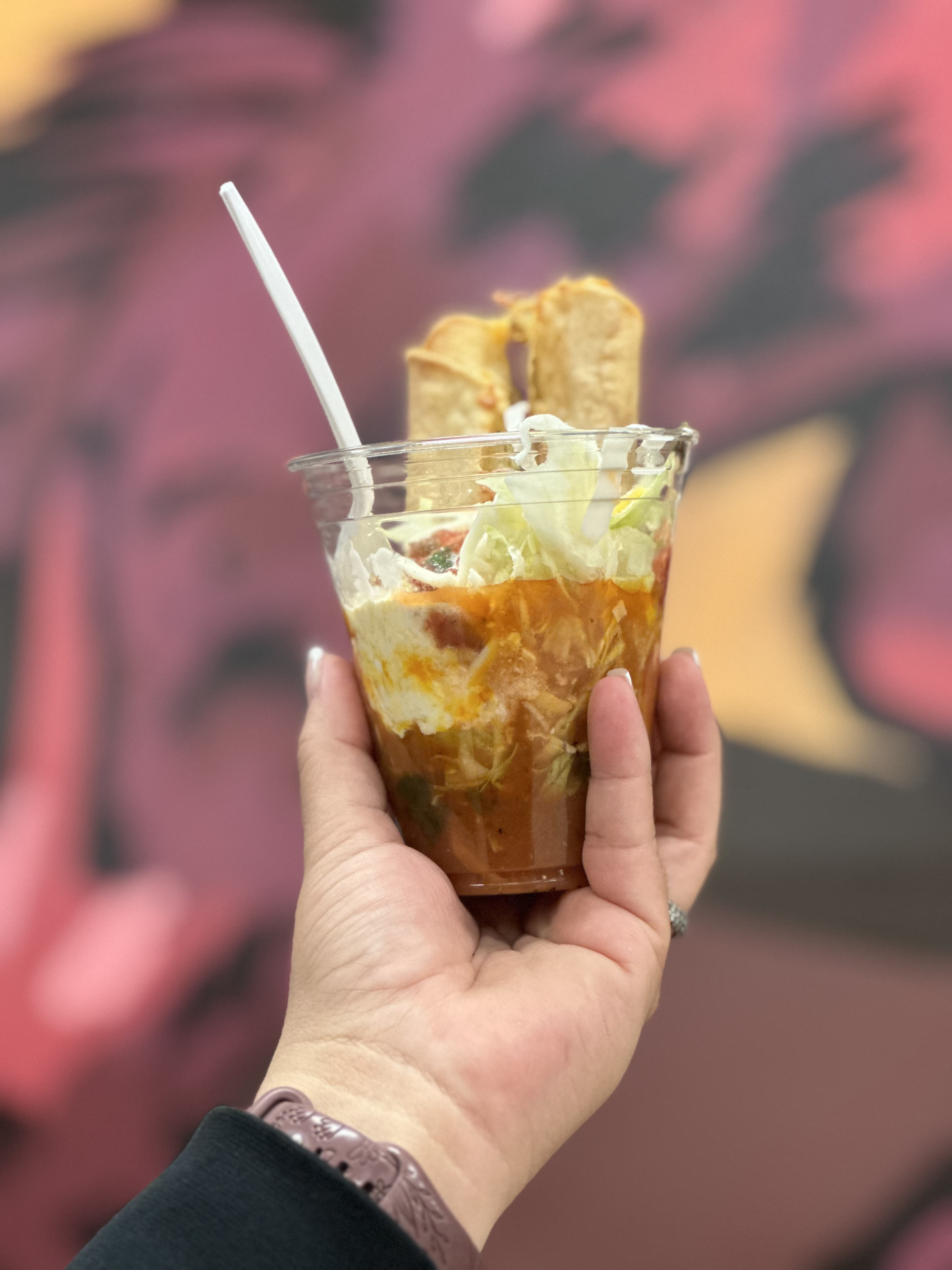 AN EXAMPLE OF A TRADITIONAL DISH REINTERPRETED IN A PLAYFUL,
APPEALING WAY OFFERED TO STUDENTS.
PHOTO CREDIT: SODEXO
Food quality and familiarity: Serving meals students recognize and enjoy
While nutrition standards guide what must be offered, the student experience is shaped by how food is prepared and how it reflects cultural and personal preferences. Scratch cooking and local sourcing consistently improve meal acceptance because they deliver freshness, flavor, and familiarity.
Case in action: Springfield’s Culinary & Nutrition Center
Springfield’s 62,000-square-foot central kitchen produces scratch-made meals and incorporates roughly 26% locally sourced ingredients. As a result, students enjoy warm, freshly prepared items—from tortillas and muffins to globally inspired entrées—that feel relevant to their lives. The kitchen’s capacity allows for ongoing menu refinement based on student feedback, making the program responsive and engaging.
Case in action: Lincoln County School District, Oregon
Lincoln County School District, in partnership with Sodexo, weaves together school food and community food systems through Compass Cupboard, a network of school-based pantries offering dignified take-home food support. Hydroponic towers located in classrooms and cafeterias grow herbs and greens used in student meals. Families expressed a desire for less processed, more culturally relevant meals, prompting a shift toward scratch cooking. This holistic approach strengthens trust between families and schools.
Food quality is more than culinary preference; it is a signal of respect. When menus reflect the identities and cultures of students, participation increases because the meal feels like it belongs to them.
Dignity and stigma: Creating a culture where every student feels welcome
Even when meals are free, stigma can deter participation. Students may avoid the cafeteria if meal lines or procedures inadvertently signal economic status. Universal meal approaches—whether through state-funded programs or community eligibility options—help normalize participation for all students.
Yet policy alone cannot eliminate stigma. Daily interactions matter: how students are greeted, how lines are organized, how payment processes are handled, and whether the environment feels inclusive.
Case in action: Lincoln County’s dignity-centered model
Sodexo and Lincoln County School District’s Compass Cupboard offer a confidential, choice-based model for families to receive food support, delivered discreetly through school-based advocates or courier systems. Students contribute by growing produce used in both meals and take-home boxes, reinforcing a culture of mutual care rather than charity. When access to food is framed as a community value, stigma diminishes and participation grows.
A dignity-centered approach acknowledges that students are more likely to eat when they feel safe, respected, and not judged.
DESIGNING FOR THE LIVED EXPERIENCE OF STUDENTS
Across the country, districts are demonstrating that school meal programs succeed when they reflect the real needs and rhythms of students’ lives. The stories of Springfield, Lincoln County, Waco ISD, and Long Branch illustrate how thoughtful design can transform the meaning and impact of a school meal.
Redesigning physical spaces reduces congestion and fosters social connection. Moving breakfast into the school day ensures that students have equitable access to a foundational meal. Scratch cooking and culturally relevant menus build trust and familiarity. A focus on dignity ensures that every student feels welcome, regardless of background or circumstance.
Together, these strategies advance a broader vision for school meals—one where nutrition, experience, and equity work together to support child well-being. When mealtime becomes a moment of care rather than a challenge to navigate, the entire school community benefits.
TOWARD A MORE HUMAN-CENTERED EXPERIENCE
Ending child hunger requires more than expanding eligibility or increasing meal counts. It demands a rethinking of how meals are offered, experienced, and integrated into the school day. The four levers outlined—environment, timing, food quality, and dignity—offer a framework for designing meal programs that nourish students physically, emotionally, and socially.
The progress seen in Springfield, Lincoln County, Waco ISD, and Long Branch shows that transformation is not only possible but is already happening. These districts demonstrate that when schools invest in the mealtime experience, they strengthen learning conditions, deepen community trust, and ensure that no child is too hungry to learn.
The future of school nutrition lies in designing daily experiences that work for every student—creating environments where nourishment supports not only academic success but also well-being and belonging.
David Newman (david.newman@sodexo.com) is the CEO of Sodexo at School, which supports student well-being across nearly 500 U.S. public school districts and 70 independent schools, and is located in North Bethesda, Maryland.